
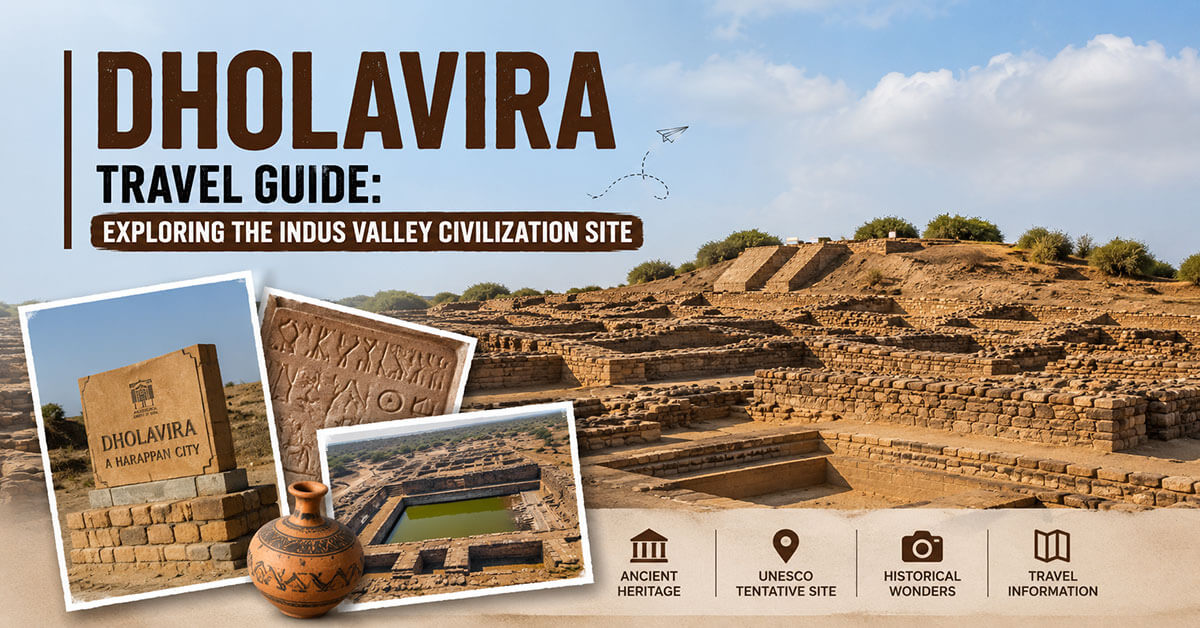
Dholavira is one of the greatest archaeological finds in India and a great example of the ancient urban planning. This 4,500-year-old city, situated in the remote Kutch region of Gujarat, was once a major centre of the Indus Valley Civilization. Today it is a UNESCO World Heritage Site known throughout the world, drawing history buffs and curious travelers to the dry island of Khadir Bet. No matter if you are an archaeology enthusiast or an adventurer looking for “Road to Heaven”, Dholavira connects you to our roots.
Historical Importance of Dholavira
A Time Frozen Legacy
Dholavira flourished between 3000 BCE and 1500 BCE, proving that early Indian civilizations possessed sophisticated knowledge of engineering and administration. Most people have heard of Harappa and Mohenjo-Daro, but Dholavira is special because it is one of the five largest Harappan settlements, and it remains one of the best preserved urban sites in Southeast Asia.
The city was discovered in 1967-68 by archaeologist Jagat Pati Joshi, revealing secrets that had been buried for millennia under the desert sands.
Harappan vs. Indus Valley Civilization
One common point of confusion for visitors is the difference between these terms. The short answer? They refer to the exact same civilization.
- “Harappan” is derived from the very first site discovered (Harappa in modern-day Pakistan).
- “Indus Valley” refers to the massive geographical spread across the river basins.
Dholavira serves as a premier example of this culture’s regional architectural uniqueness, showing how adapted and resilient these ancient people were to their specific environments.
Architectural Marvels and Urban Planning
The Tripartite City Layout
Unlike most other ancient sites which grew in a random and organic way, Dholavira was laid out in a methodical fashion and divided into three distinct zones:
- The Citadel: An extensively fortified castle-like structure that has ceremonial and form, it is the central part of the city and is believed to have been used by the royal family or high-ranking officials.
- The Middle Town: Residential areas across the town of Dholavira, these areas are well-organised with neat, direct roadways. They indicate that Dholavira had an efficient administrative system for both residences and businesses within the town.
- The Lower Town: Occupied primarily by traders and artisans, this area contains large stone walls to separate the town from the rest of the world.
This specific layout reflects a highly organized and stratified social order, executed with incredible geometric precision.
Excellence in Water Management
The Dholavira harappan civilization is most noted for it’s advanced system of managing water, while also achieving the unthinkable of creating water management systems located on the edge of the desert to provide for use in one of the most hostile climates to liquid water, as opposed to water being thought of as plentiful.
These ancient engineers dug large storage reservoirs from the bedrock of the ground, which would collect and store every droplet of rain that fell, as well as collecting all of the run-off water from the seasonal monsoons. To this day, these structures are considered to be some of the oldest and most efficient water collection systems in the world, and are still an incredible feat of engineering, even by modern standards.
Top Things to Do and See
The Museum and the Iconic Signboard
One of the most interesting artifacts discovered at the site is a large “signboard” inscribed with ten symbols of the mysterious Indus script. It is one of the longest sequences of Harappan characters ever found, waiting for someone to finally crack its code.
To see the smaller, movable treasures of the site, a visit to the Archaeological Museum at the entrance is essential. Here, you can view:
- Intricate beads and pottery shards
- Ancient copper tools
- Well-preserved seals featuring the iconic, mythical “unicorn” imagery
Beyond the Ruins: Wildlife & Fossil Park
History at Dholavira goes even further back than the Harappans.
- The Fossil Park: Located nearby, this is a delight for paleontology fans, featuring wood fossils and the remains of prehistoric plants dating back millions of years.
- Flamingo Lake: For nature lovers, this is a peaceful spot for birdwatching. Depending on the season, migratory flamingos paint the landscape pink alongside other unique desert wildlife species.
Planning Your Visit: Logistics and Tips
How to Reach Dholavira
Reaching this remote island involves a deeply scenic journey. The nearest major city is Bhuj, located approximately 220 km away.
You can travel by air or train to Bhuj and then hire a private taxi or take a local bus through the town of Rapar. The drive itself is unforgettable, thanks to the “Road to Heaven”—a stunning, straight stretch of highway that cuts directly through the ethereal white salt marshes of the Rann of Kutch.
Practical Information for Travelers
- Timings: The archaeological site is generally open from 8:00 AM to 6:00 PM daily.
- Best Time to Visit: The ideal months are October to March when the weather is pleasant. Summers should be avoided entirely due to extreme desert heat.
- Connectivity: Cell phone reception can be patchy and unreliable in this remote area. It is highly recommended to download your maps and travel details beforehand.
- What to Bring: For daytime, light cotton clothing, comfortable walking shoes, sunglasses, hats and sunscreen are a must. Don’t forget a light jacket, as desert evenings can get surprisingly cool.
Conclusion
Dholavira represents far more than a pile of old stones: it stands testament to the ingenuity, persistence, and brilliance of those who came before us. With its aqueducts and reservoirs, and the unresolved mystery of their undeciphered symbols, each aspect of Dholavira has something unique to offer regarding our understanding of the past.
When you plan your journey to experience one of earth’s most revitalizing pieces of natural history, use local experts at Gujarat Tour Guide to coordinate your transportation, local guides, overnight stays, and to explore even more ancient sites within Gujarat’s borders. You can leap over the lake of salt and step back into the dawn of mankind – 4,500 years ago.