
Quick Inquiry
Gujarat is a State on the western coast of India, having many good sites to visit.

Category: Somanth

Best Somnath Tourist Attractions: A Complete Local Travel Guide

Best Somnath Tourist Attractions

Tucked away along the wind-swept coastline of Saurashtra, Somnath is where deep spiritual traditions meet the roaring Arabian Sea. Most people visit as pilgrims, but whether you are here out of faith or just curious to see ancient stone carvings and ocean sunsets, this town has a way of slowing you down and leaving a genuine impression.

If you are planning a weekend trip or adding a coastal stop to a broader Gujarat itinerary, this guide breaks down what to see, how to get around, and how to make the most of your time.

Why Visit Somnath?
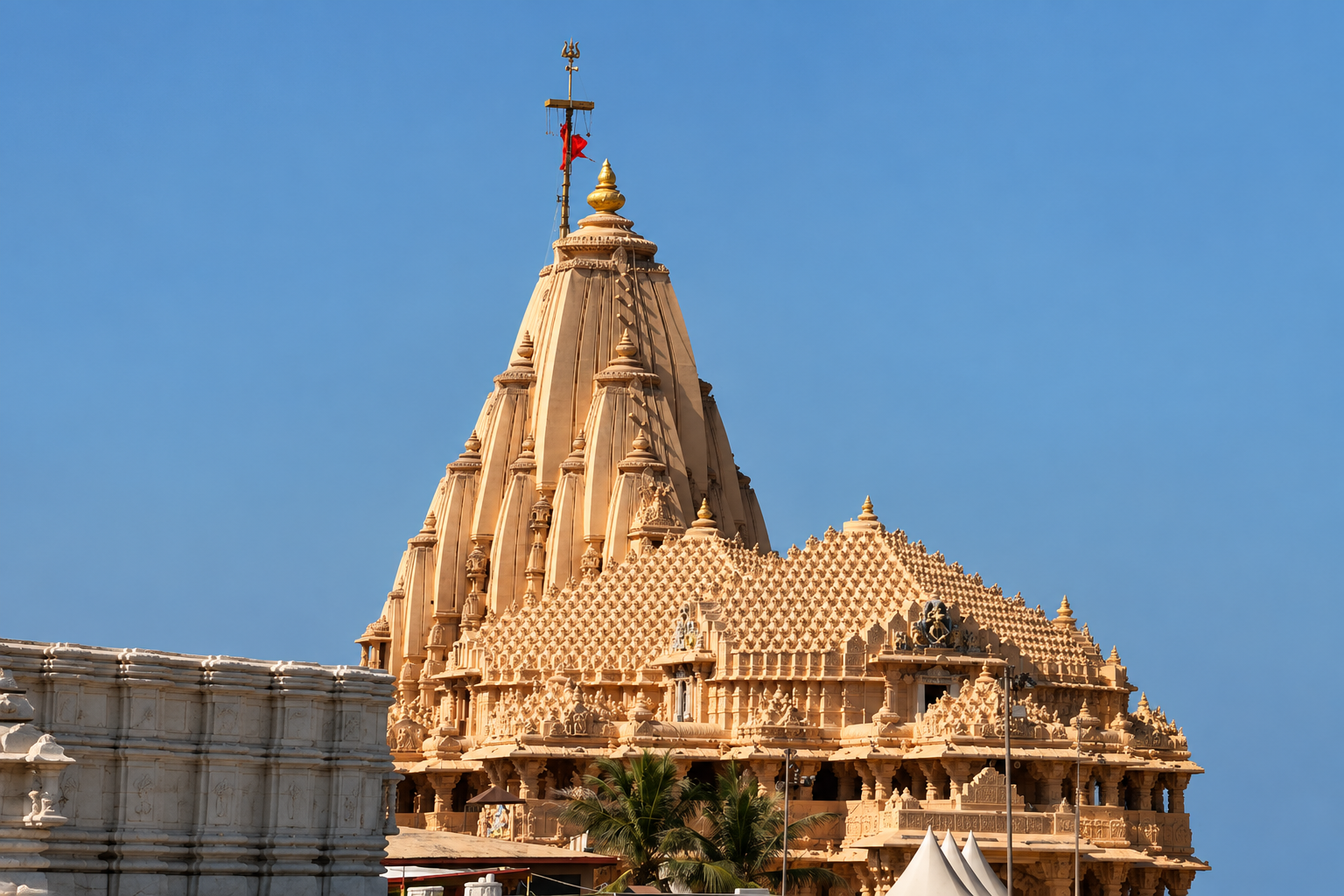
Somnath Temple

Somnath is not just a temple town, it is a living part of Indian history. The town is unusual, as it is located at the meeting of three holy rivers and the sea, thus combining a tranquil beach-like ambiance with a lively devotional mood.

You could happily spend two days wandering through quiet mandirs, sampling local snacks along the beach walk, watching golden sunsets over the ocean and soaking up the town’s history.

Key Attractions at a Glance

Landmark Location / Distance Entry Fee Visiting Hours What Makes It Worth Visiting
Somnath Temple Prabhas Patan seafront Free 6:00 AM – 9:30 PM The iconic primary Jyotirlinga, stunning seaside views, and an evening light show
Bhalka Tirth ~4 km from main temple Free 6:00 AM – 8:00 PM Peaceful shrine under a sacred tree, tied to Lord Krishna’s final moments
Suraj Mandir North side of Triveni Ghat Free 7:00 AM – 6:00 PM Ancient Sun temple with weathered stone wall carvings
Prabhas Patan Museum 300m walk from temple ₹5 (Indians) / ₹50 (Foreigners) 10:30 AM – 5:30 PM (Closed Wed) Historic temple relics, carved pillars, and ancient inscriptions

Must-Visit Landmarks in Somnath

1. Shree Somnath Jyotirlinga Temple
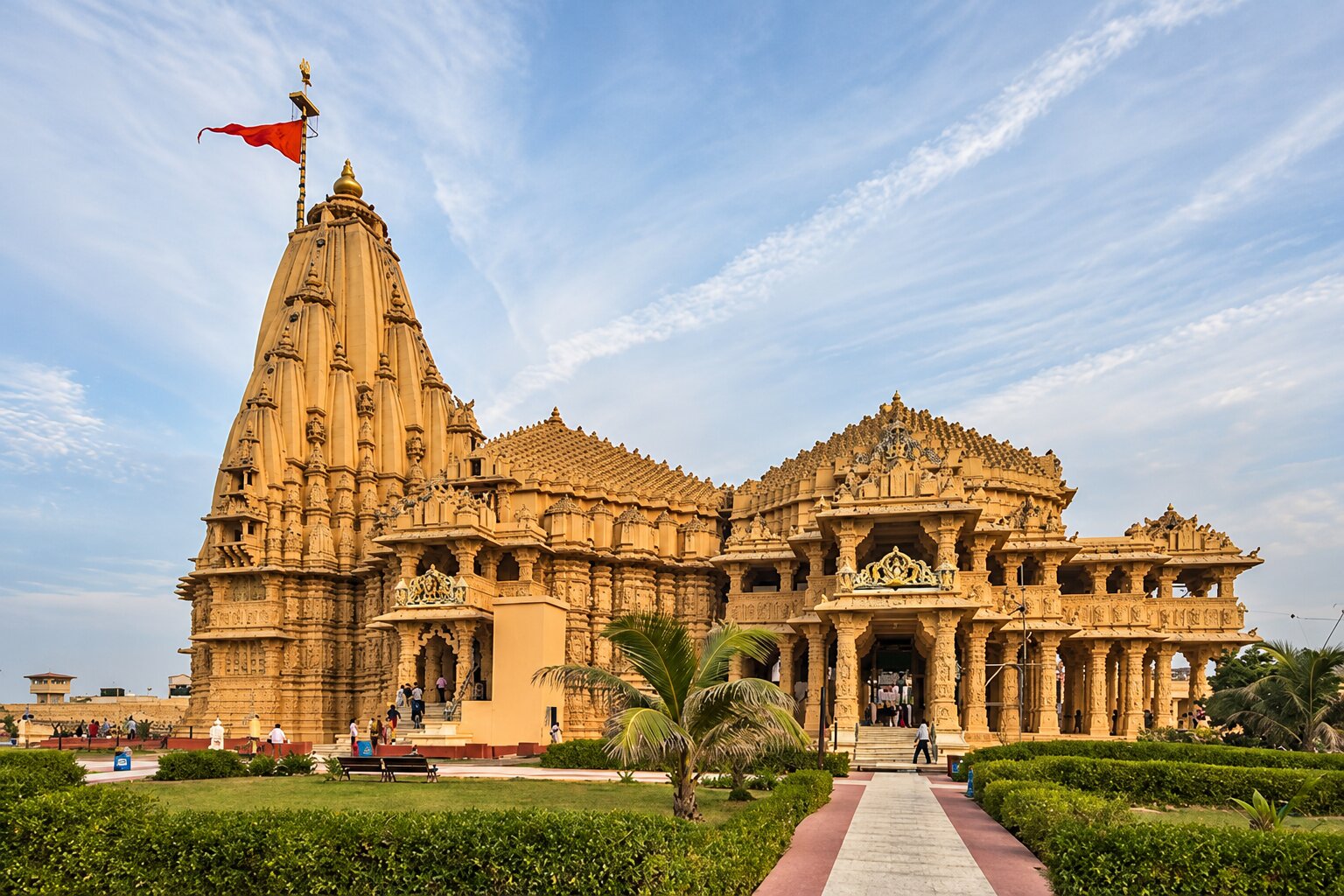
Somnath Jyotirlinga Temple

The Shree Somnath Jyotirlinga Temple is celebrated as the first of the twelve sacred Jyotirlingas of Lord Shiva. According to Hindu belief, the original shrine was constructed by Soma (the Moon God) in gratitude to Lord Shiva. Foreign invaders wrecked and rebuilt this place over and over across the centuries, but locals just kept putting it back together every single time. It’s basically become the ultimate symbol of stubborn faith and survival.

The current building is an absolute beauty done in the classic Solanki style. It’s carved out of this warm, golden sandstone that catches the late afternoon light just right making the big open courtyards and intricate pillars look incredible as the sun dips straight into the sea.

  • Darshan & Timings: To avoid standing in long ques you can visit the temple early morning. The evening aarti takes place around 7:00 PM. Shortly after, an open-air light and sound show is held on the temple grounds with the ocean waves thundering in the background.
  • Security Rules: Security here is intense. Mobile phones, smartwatches, fitness bands, digital car keys, and cameras are strictly banned inside the gates. Make sure to deposit all electronics at the free baggage counter before entering the main line.

2. Bhalka Tirth & Dehotsarg Tirth
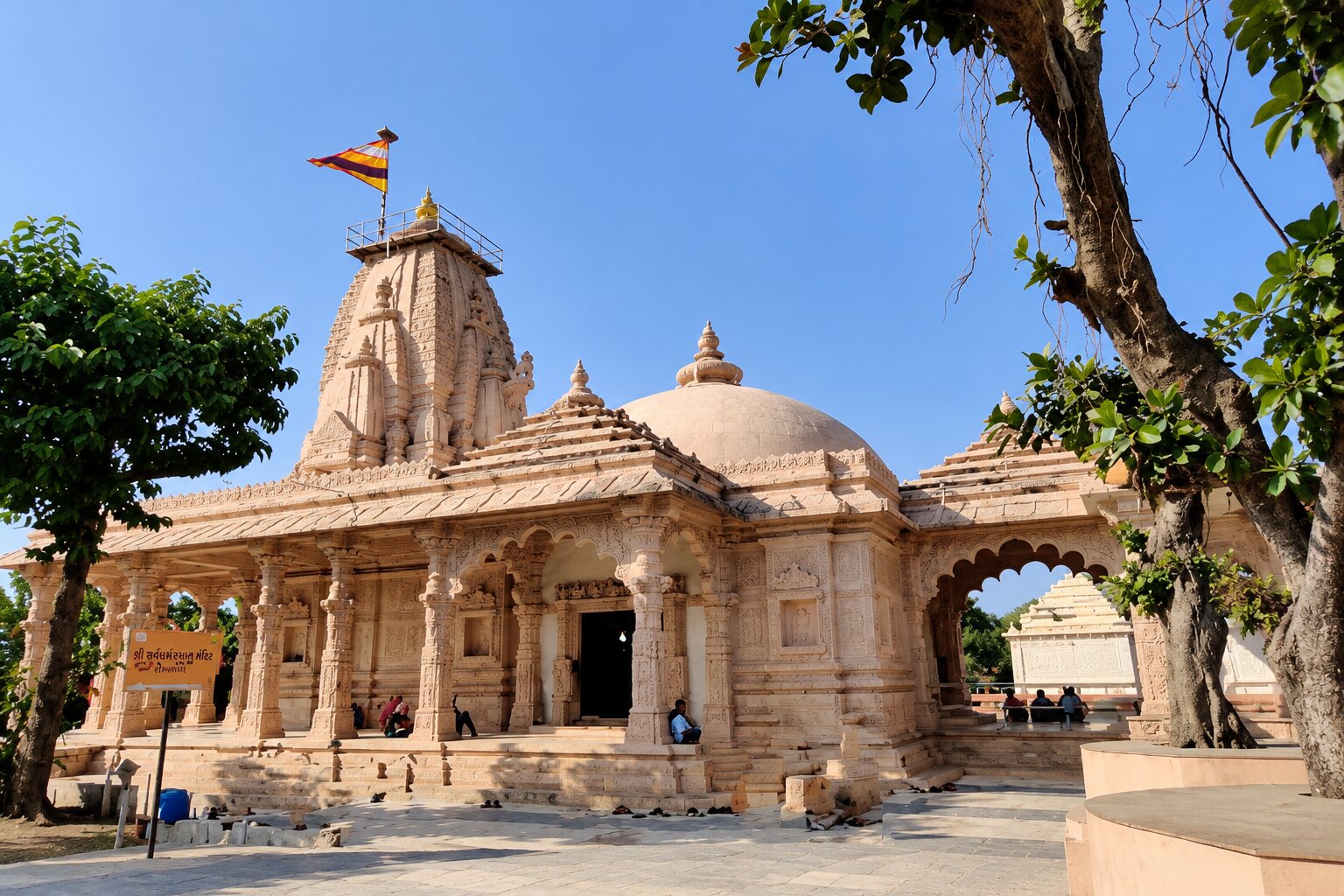
Bhalka Tirth

Located about 4 kilometers down the road toward Veraval, Bhalka Tirth is a quiet, leafy shrine. According to local legend, this is the spot where Lord Krishna was resting under a peepal tree when he was struck in the foot by an arrow shot by the hunter Jara.

The inner complex houses a white marble idol depicting Krishna in a reclining posture beside a towering peepal tree. Just a short distance away, on the banks of the Hiran River, lies Dehotsarg Tirth it is the serene riverfront spot marking where Krishna is believed to have departed his mortal form.

3. Triveni Sangam & Gita Temple
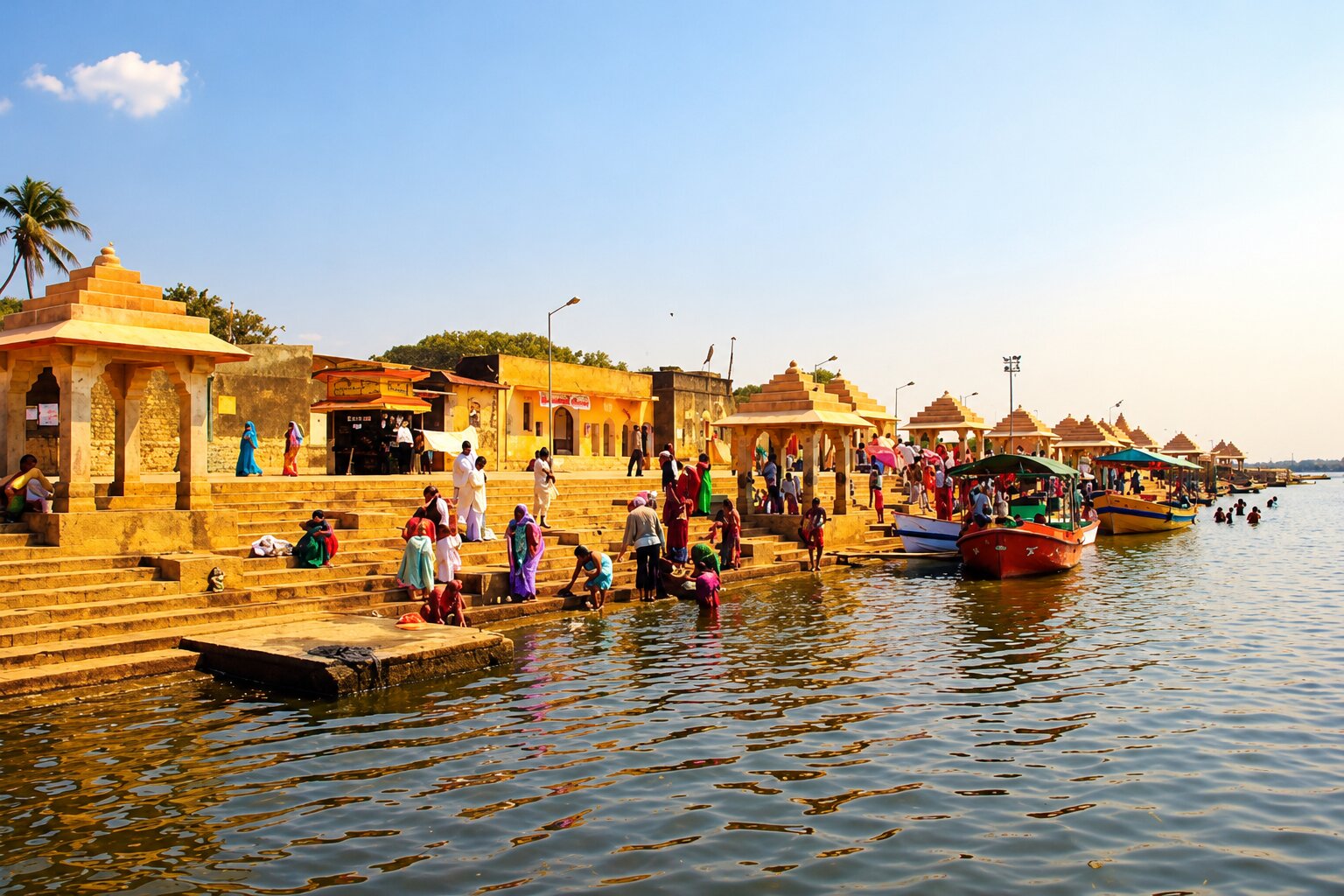
Triveni Sangam

Triveni Sangam is the natural geographical junction where three rivers which are the Hiran, Kapila, and the mythical Saraswati, merge before flowing into the Arabian Sea. Pilgrims gather along the stone ghats throughout the morning to take holy dips and offer prayers.

A short walk up from the ghats leads you to the Gita Temple, built in the 1970s out of polished white marble. The inner sanctum features 18 marble pillars, each intricately inscribed with verses from the Bhagavad Gita. It’s a cool, quiet hall with great natural acoustics, perfect for taking a quick break from the heat.

4. Suraj Mandir & Paanch Pandav Gufa
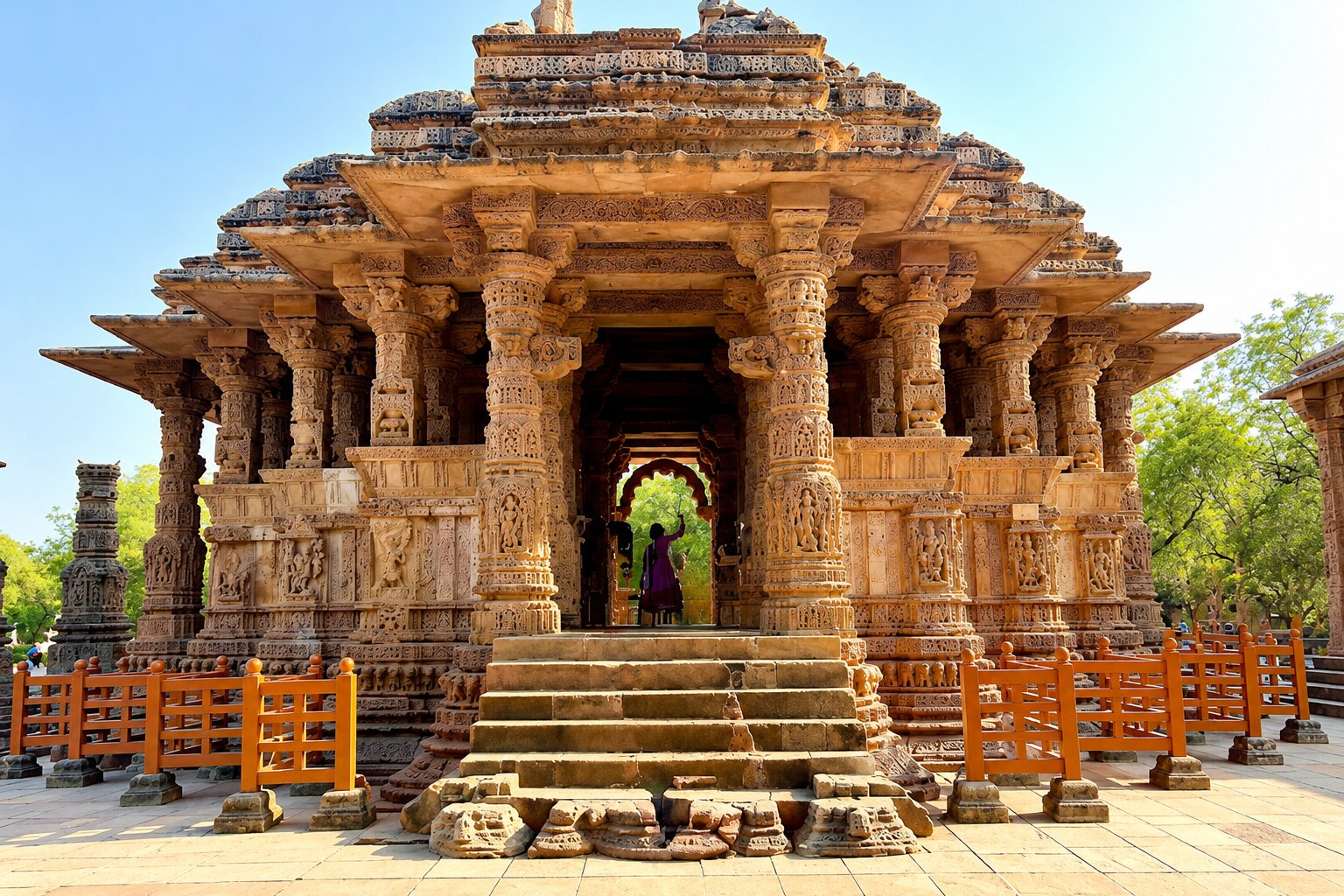
 Suraj Mandir

  • Suraj Mandir: Tucked right near the northern edge of Triveni Ghat, this weathered little Sun Temple feels worlds away from the busier spots in town. If you look closely at its worn sandstone walls, you can still spot intricate old carvings of elephants, lions, and a central panel showing the Sun God driving his seven-horse chariot.
  • Paanch Pandav Gufa: Perched on a quiet, rocky slope close to the river, this underground cave shrine is traditionally linked to the Pandava brothers’ time in exile. Walking up the steep stone steps leads you inside a cool, shadowy cavern housing small shrines dedicated to Lord Shiva, Goddess Durga, Ram, Sita, and Hanuman.

Coastal Escapes & Cultural Stops

Somnath Beach & Chorwad Beach
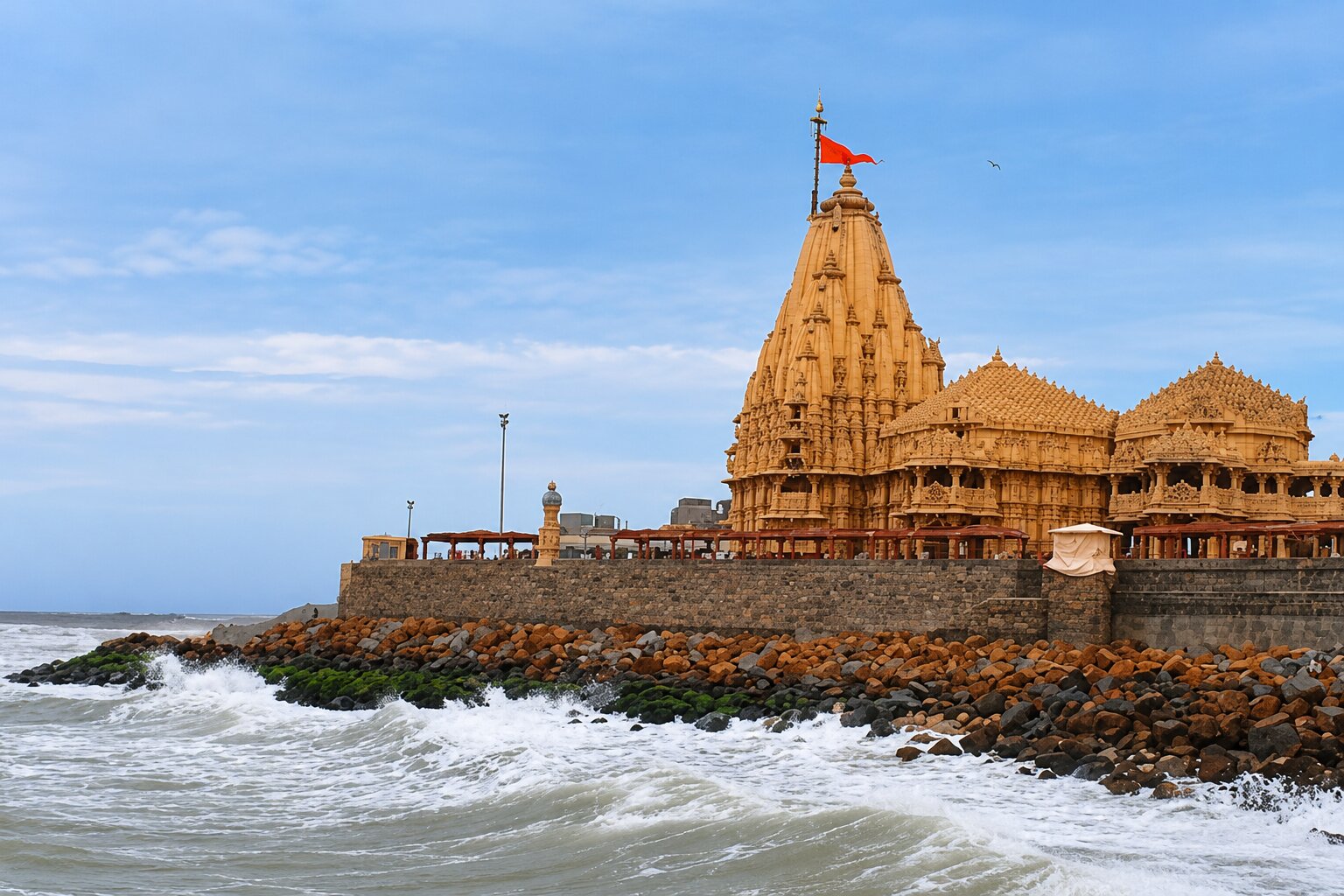
Somnath Beach

  • Somnath Beach: It is located directly adajcent to the temple, this wide stretch of sand offers sweeping coastal views. Due to heavy undercurrents and rough sea conditions, swimming is strictly prohibited. However, it remains a popular local spot for evening walks, sipping fresh coconut water, and grabbing hot local snacks like bhutta (roasted corn) or pau bhaji.
  • Chorwad Beach: If you don’t mind driving about 20 to 25 kilometers down the coast, Chorwad Beach makes for a great side trip. Once a summer retreat for the Nawab of Junagadh, it features rocky bluffs, crashing surf, and old seaside estate ruins that attract landscape photographers.

Prabhas Patan Museum 
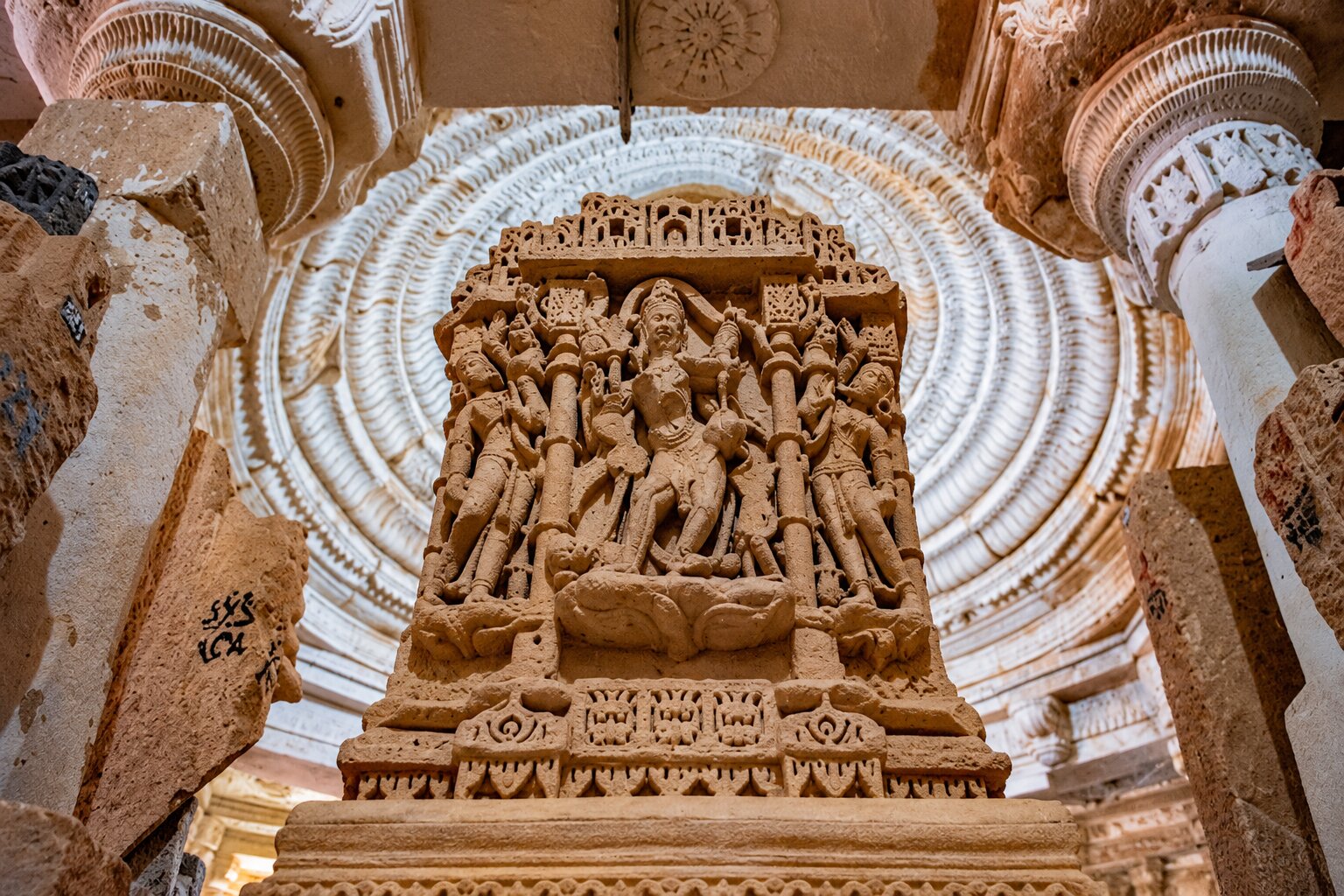
Prabhas Patan Museum

If you enjoy history and archaeology, spend 30 to 45 minutes exploring this small museum located a few steps north of the main temple market. Established in 1951, it houses preserved stone pillars, delicate statues, ancient inscriptions in multiple languages, and architectural ruins recovered from older iterations of the Somnath temple.

  • Timings: Open from 10:30 AM to 5:30 PM (Closed every Wednesday, public holidays, and select Saturdays).
    Entry Ticket: ₹5 for Indian citizens, ₹50 for foreign visitors.

Practical Travel Tips & Local Logistics

  • When to Go: October through February brings the best weather, with comfortable daily temperatures (10°C to 28°C) that make walking around temples easy. Summer months get quite hot and humid, while the monsoon brings heavy rain and choppy seas.
    Somnath Dwarka Tour Package
  • Dress Etiquette: Somnath is a traditional pilgrim town. Out of respect for local customs, wear clothing that covers your knees and shoulders. Footwear must be left at managed shoe stands outside all temple premises.
  • Getting Around: Auto-rickshaws are abundant throughout town. If you want a cheap local tour, the local bus service (“Somnath Darshan Bus”) operates runs throughout the day, stopping at major spots like Bhalka Tirth, Triveni Sangam, and the main temple complex for a nominal ticket fee.
    Facebook

Planning Your Somnath Trip

A 1 to 2-day itinerary gives you plenty of time to explore the main sites, watch the light show, visit the river confluence, and enjoy the coastal views without feeling rushed.

If you want to streamline your trip logistics or explore broader Gujarat travel packages, you can look up options through Gujarat Tour Guide, a reliable resource for custom holiday packages, local transport arrangements, and regional itineraries.

Frequently Asked Questions (FAQs)

Q1: What makes Somnath a popular tourist destination?

A: Somnath is predominantly known to contain the Shree Somnath temple which has been recognized as the foremost of the twelve sacred Jyotirlingas of Shiva that are found in India. It is also noted for its significant links with Lord Krishna and its scenic coastal position on the shores of the Arabian Sea.

Q2: Are visitors allowed to bring cameras and cell phones into Somnath temple?

A:No. The temple closely prohibits all electronic items such as mobile phones, cameras, smartwatches and keys. Therefore, guests have to leave them in a nearby locker available for free near the main entrance of the temple..

Q3: How long should a person remain in Somnath?

A:Generally knowing that the tour doesn’t take long, one can spend only about two days in Somnath temple to be able to visit temple for darshan, enjoy evening sound and light show, and also visit Bhalka Tirth..

Q4:What is the best time of year to visit Somnath?

A:The winter months from October to February offer the most pleasant weather, with mild temperatures that make sightseeing comfortable.

The Ultimate Dwarka–Somnath Coastal Road Trip Guide (2026 Edition)

A journey along the Gujarat coast is more than just a drive, it is a pilgrimage (Jatra) through time, connecting the ancient kingdom of Lord Krishna to the everlasting mandir of Lord Shiva. The 230-kilometer stretch between Dwarka and Somnath is widely regarded as one of India’s most beautiful coastal routes

With the recent launch of the Sudarshan Setu and the upcoming Greenfield Expressway, 2026 is the perfect year to start on this spiritual and scenic adventure.

Begin Your Journey in the Holy Kingdom of Dwarka

Dwarka, one of the holy Char Dham sites, is an excellent starting point. The city is filled with divine energy centered around the Dwarkadhish Temple (Jagat Mandir).

The Divine Dwarkadhish Temple & Darshan Procedures

  • Timing: The temple opens at 6:30 AM for Mangla Aarti.
  • Special Entry Pass: In 2026, general darshan will still be free, but there will be a Special Entry Pass that lets you get in faster.
  • Booking: We highly recommend booking special sevas, such as Shringar Bhog, via the official website (dwarkadhish.org) well in advance.

Crossing the Iconic Sudarshan Setu

A major update for 2026 travelers is the Sudarshan Setu, India’s longest cable-stayed bridge (2.32 km). It connects the Okha mainland to Bet Dwarka, replacing the traditional ferry dependence. The bridge features footpaths adorned with Gita verses and Krishna imagery, turning a transit point into a meditative experience.

Navigating the Coastal Road

When you leave Dwarka, the drive along the Arabian Sea is marked by gentle breezes and hundreds of beautiful windmills.

Road Conditions & The Greenfield Expressway

  • Current Route: Most travelers use the well-maintained NH-51.
  • Greenfield Highway: Construction on the massive Somnath-Dwarka Expressway (approved in 2025) is set to ramp up by mid-2026. Once complete, it will cut travel time by approximately 30%, making the Ahmedabad-to-Somnath journey just 4 hours.
  • Toll Updates: As of April 2026, FASTag is mandatory for all highway tolls. Cash is no longer accepted, and paying via UPI without a valid tag now incurs a 1.25x penalty fee.

Car Rental & Logistics

For those not driving their own vehicles, rentals are easily available:

  • Sedans: ₹1,500 – ₹2,500/day (local) or ₹14–₹16/km (outstation).
  • SUVs: ₹2,800 – ₹4,500/day.
  • One-way Drops: Professional cab services like Savaari or MakeMyTrip offer Dwarka-to-Somnath drops starting around ₹4,100.

Must-Visit Pitstops

  • Harsiddhi Mata Temple (Miyani): Just 65 km from Dwarka. People say Lord Krishna built it. The 100-step climb to the hill gives you a view of the Arabian Sea from all sides.
  • Porbandar’s Heritage: Visit Kirti Mandir (Gandhiji’s birthplace) and the Sudama Temple, the only one in India dedicated to Krishna’s childhood friend.
  • Madhavpur Beach: Located 70 km before Somnath, this “Nature’s Canvas” features blue waters and coconut trees. 

Note: Swimming is strictly prohibited due to high tides.

Arriving at the Pratham Jyotirlinga: Somnath

The trip ends at the beautiful Somnath Temple, which has a 150-foot Chalukya-style shikhara.

  • VIP Darshan: Get a VIP pass from somnath.org to skip the long lines.
  • Sandhya Aarti: Held at 7:00 PM, this is the most crowded but spiritual highlight of the day.
  • Light & Sound Show: Daily from 8:00 PM – 9:00 PM. For ₹30–₹50, the “Jay Somnath” show narrates the temple’s resilient history.

Extending the Adventure to Sasan Gir

Just 65 km from Somnath lies the Gir National Park, the final bastion of the Asiatic Lion.

  • Population: Approx. 650 lions.
  • Booking: Jeep Safaris must be booked online at least 30-90 days in advance.
  • Peak Season: December to March.

Help from Professionals

For a fully curated experience including AC vehicle transfers, hotel stays and guided tours, check out the specialized Gujarat Tour Guide packages for 2026.

Dwarka to Gir: The Ultimate Gujarat Coastal & Wildlife Route

Stop Following the Map. Start Following Your Soul. This Is Where Legends Converge.

Gujarat is a profound journey, a story arc spanning five millennia, rather than a collection of discrete destinations. Yet, most travelers settle for fragmented tours—a pilgrimage here, a safari there.

We refuse to let you miss the powerful, emotional connection that links the ancient city of Lord Krishna to the last refuge of the Asiatic Lion. This is the Dwarka Somnath Tour Package with Gir National Park—a superior, 5-day trajectory meticulously engineered by Gujarat Tour Guide to deliver a complete sensory and spiritual fusion that is absolutely unmissable.

This isn’t just a tour; it’s a deep-dive into the soul of Saurashtra. You will trace the footsteps of gods, stand before monuments of resilience, and witness nature’s greatest predators—all against the dramatic backdrop of the Arabian Sea.

Phase 1: Dwarka—The Gates to the Eternal


Dwarka To Gir

Your pilgrimage begins at the very edge of India, in the sacred city of Dwarka, the “Gateway to Heaven.” Here stands the magnificent Dwarkadhish Temple, a Char Dham site, soaring heavenward in a testament to enduring faith. Two nights allows you to move past the rush and truly internalize the city’s powerful devotion.

  • The Moment: Witness the ceremonial Pataka (flag) changing high atop the temple—a ritual that has played out daily for centuries, connecting you directly to the pulse of the divine city.
  • The Journey: Take a brief ferry to Bet Dwarka, the island where Lord Krishna is believed to have made his original residence.
  • The Trinity: Complete a vital spiritual circuit at the Nageshwar Jyotirlinga, one of the 12 sacred self-manifested shrines of Shiva.
  • The Unwind: Recharge at the pristine Shivrajpur Beach, one of the region’s cleanest coastlines, preparing you for the journey ahead.

We give you time to breathe, pray, and absorb—transforming a visit into a spiritual experience.

Phase 2: Somnath—The Resilience of the Tide

Day 3 takes you along the legendary Arabian Sea coast to the revered Somnath. But first, a pause in Porbandar at the Kirti Mandir, the birthplace of Mahatma Gandhi—a poignant reminder that history and faith are often intertwined.

The Somnath Mahadev Jyotirlinga stands not just as a temple, but as a towering symbol of resurrection, having been rebuilt nine times. Its architecture is magnificent, its location—where the sea meets the land—is spectacular.

  • The Power: Experience the spine-tingling devotion of the evening Aarti (prayer ritual) at the temple, a moment that echoes across millennia.
  • The Confluence: Meditate at Bhalka Tirth, where Krishna is believed to have departed, and the Triveni Sangam, the sacred meeting of three rivers.

This single, impactful night acts as the perfect spiritual crescendo before the shift to the wild.

Phase 3: Sasan Gir—The Last Kingdom

The final destination is the crucial contrast that makes this itinerary legendary: the rugged, untamed beauty of Sasan Gir National Park. This is where you trade the quiet sanctity of stone for the primal roar of nature.

Gir is the only place in the world where the majestic Asiatic Lion holds court. Your afternoon Jeep Safari on Day 4 is not just sightseeing; it’s a commitment to witnessing the world’s most unique cat species in its final, natural stronghold. This forest is vibrant, thrilling, and utterly necessary for a complete Gujarat experience.

  • The Thrill: The dedicated afternoon Jeep Safari is strategically timed for the best chance of sighting, providing golden-hour photo opportunities.
  • The Habitat: Explore the crucial ecosystem that supports not just lions, but leopards, sambar, and the endemic Chousingha (four-horned antelope).

The Superior Route: Why Our 4N/5D Journey is Non-Negotiable

Other tours offer fragments. Gujarat Tour Guide offers the narrative.

  1. Logical Flow: This itinerary moves organically from spiritual depth (Dwarka) to historical resilience (Somnath) to exhilarating wildlife (Gir).
  2. Maximum Impact: You cover three distinct experiences—major pilgrimage, heritage, and unique wildlife—in a compressed, efficient timeframe.
  3. Hassle-Free Execution: We take on the stress of logistics, accommodations, and the often tricky Gir safari permits, ensuring your only job is to experience the magic.

Your Adventure Starts Now. Claim Your Throne.

Ready to stop dreaming and start doing? This perfect fusion of devotion, heritage, and wildlife is waiting.


Don’t miss the journey of a lifetime. Book your Dwarka Somnath Tour Package with Gir National Park today with Gujarat Tour Guide.